Agentic AI doesn’t replace data analysts; it changes what they’re accountable for, and most data strategies haven’t caught up.
Key Takeaway: The shift from analytics to agentic AI is not a shift from humans to machines. It’s a shift from reporting what happened to deciding what happens next, and organisations that treat it as a tooling upgrade instead of a strategy rebuild will fall behind fast.
A retail chain notices weekend sales dipping in three cities. A traditional analytics setup flags the drop in a dashboard by Monday. An agentic system investigates the drop, cross-checks it against inventory and footfall data, and triggers a restocking action before the analyst even opens their laptop. That’s the practical difference this guide walks through.
From Dashboards to Decisions
Classic data analytics is descriptive: SQL queries, Excel models, and BI dashboards summarise what already occurred. Agentic AI adds a layer on top: autonomous agents that monitor data streams, reason over context, and execute predefined actions without waiting for a human trigger.
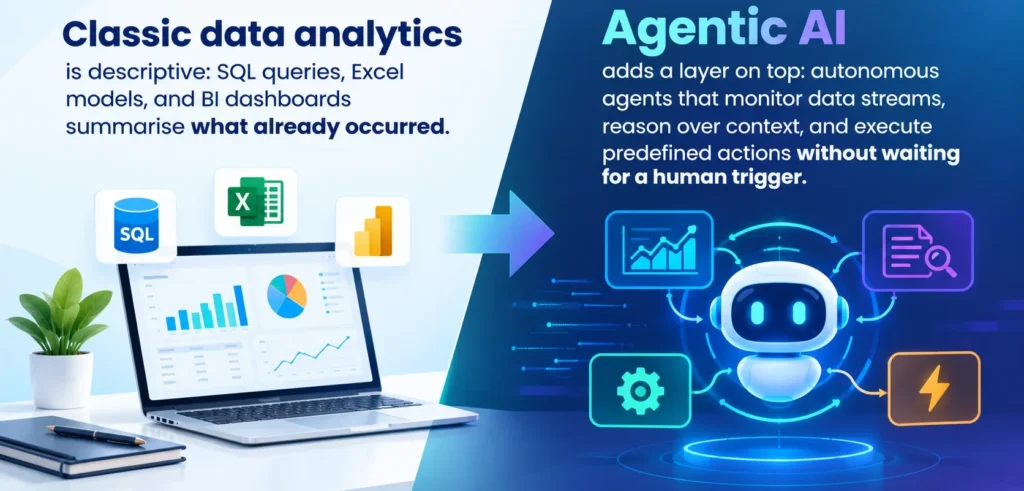
The analyst’s role doesn’t disappear. It moves upstream, into designing the rules, guardrails, and escalation logic the agent operates within.
Redesigning Strategy for Agentic AI
Most organisations still architect data pipelines around a monthly reporting cycle: clean data, build a dashboard, present insights. Agentic AI needs data that’s accurate and accessible in real time, because a wrong number now triggers a wrong action, not just a wrong slide.
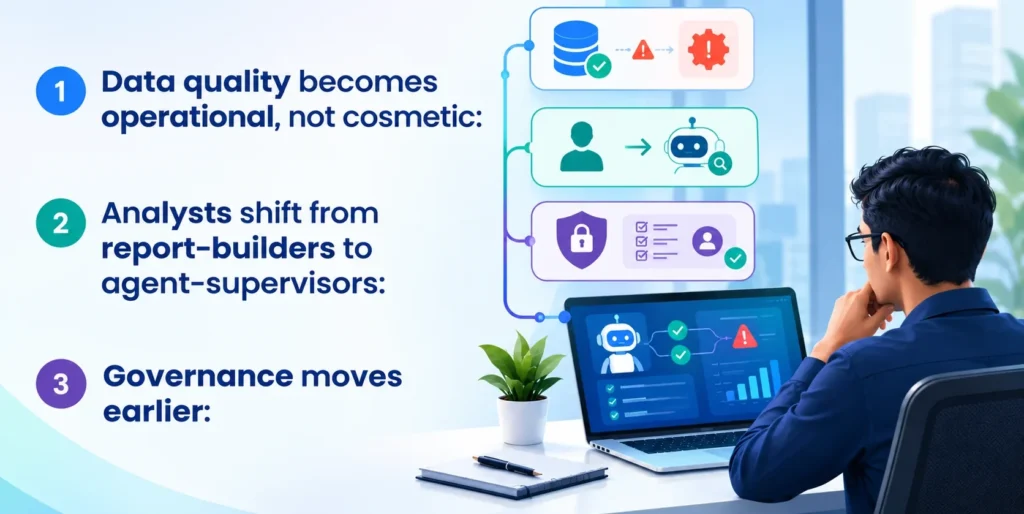
Three shifts matter most:
- Data quality becomes operational, not cosmetic: an agent acting on stale or dirty data can trigger real-world errors, not just misleading charts.
- Analysts shift from report-builders to agent-supervisors: the job becomes auditing agent decisions and refining the logic behind them.
- Governance moves earlier: access controls and approval thresholds need to be built into the pipeline before an agent goes live, not added after an incident.
A logistics firm using agentic systems to reroute shipments, for instance, still needs an analyst validating that the underlying cost and delay data feeding the agent is correct; the stakes just moved from a quarterly report to a same-day decision.
Next Steps
At SBS, we build our data analytics program around exactly this shift, teaching SQL, Python, and Excel as the foundation, then showing how that foundation feeds into AI-driven, decision-ready pipelines rather than static reporting. Aspiring analysts who understand both sides are the ones organisations are hiring for right now.